
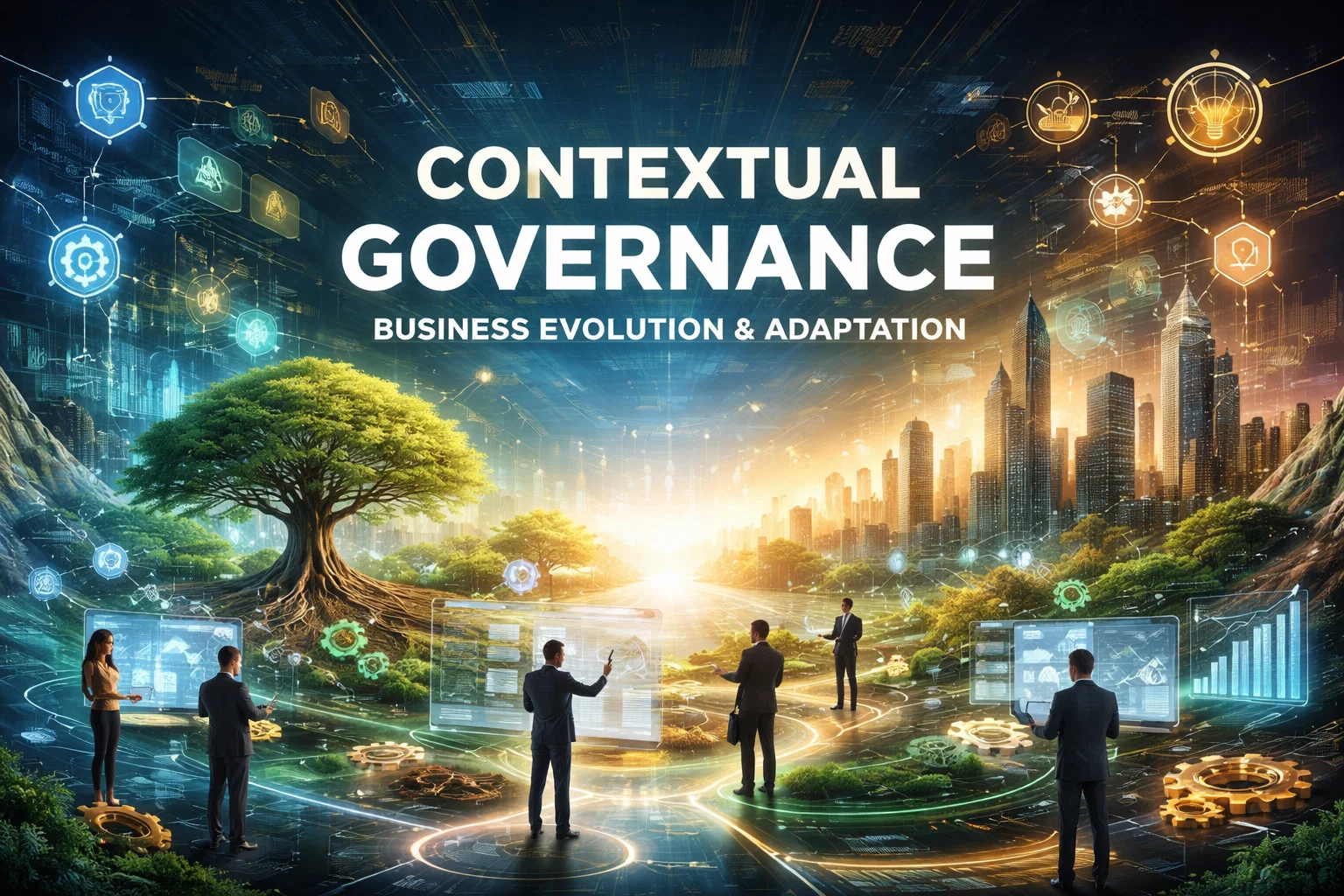
Artificial intelligence is no longer just a tool for automation—it has become a strategic force shaping how businesses operate, compete, and grow. As organizations increasingly rely on AI systems, the need for effective governance has become critical. This is where AI contextual governance comes into play.
AI contextual governance refers to the practice of managing artificial intelligence systems based on the specific context in which they operate. It ensures that AI decisions are ethical, compliant, transparent, and aligned with business goals. In today’s rapidly changing digital environment, this approach is essential for enabling business evolution and adaptation.
Understanding AI Contextual Governance
AI contextual governance goes beyond traditional governance frameworks. Instead of applying rigid rules across all scenarios, it adapts policies and oversight mechanisms based on context—such as industry, geography, user behavior, and risk level.
For example, an AI system used in healthcare requires stricter controls compared to one used in marketing analytics. Contextual governance ensures that each system operates within appropriate boundaries while still delivering value.
Key elements include:
- Ethical AI practices
- Data privacy and security
- Regulatory compliance
- Transparency and accountability
- Continuous monitoring and improvement
By focusing on context, businesses can strike a balance between innovation and responsibility.
Why Businesses Need Contextual Governance
As AI adoption accelerates, businesses face increasing complexity. Different markets, regulations, and customer expectations demand flexible governance models.
Managing Risk Effectively
AI systems can introduce risks such as bias, data breaches, or incorrect decision-making. Contextual governance helps identify and mitigate these risks by tailoring controls to specific use cases.
Ensuring Regulatory Compliance
Different regions have varying laws regarding data protection and AI usage. Context-aware governance frameworks help organizations stay compliant without slowing down innovation.
Building Customer Trust
Consumers are becoming more aware of how their data is used. Transparent and ethical AI practices build trust and strengthen brand reputation.
The Role of AI in Business Evolution
AI is a key driver of business evolution. Companies that embrace AI can transform their operations, improve efficiency, and unlock new opportunities.
Data-Driven Decision Making
AI enables businesses to analyze large volumes of data and extract actionable insights. This leads to smarter decisions and better outcomes.
Automation and Efficiency
Routine tasks can be automated, allowing employees to focus on strategic initiatives. This increases productivity and reduces operational costs.
Innovation and Competitive Advantage
Organizations that leverage AI effectively can innovate faster and stay ahead of competitors. From personalized marketing to predictive analytics, AI opens new possibilities.
However, without proper governance, these benefits can quickly turn into liabilities. That’s why contextual governance is essential for sustainable growth.
Business Adaptation in a Dynamic Environment
The modern business landscape is constantly evolving. Economic shifts, technological advancements, and changing consumer behavior require organizations to adapt quickly.
AI contextual governance supports this adaptation by providing:
- Flexible decision-making frameworks
- Real-time monitoring of AI systems
- Scalable governance models
- Continuous learning and improvement
This adaptability ensures that businesses can respond effectively to new challenges and opportunities.
Implementing AI Contextual Governance
Adopting contextual governance requires a structured approach. Businesses need to integrate governance into every stage of the AI lifecycle.
Define Clear Objectives
Start by identifying the purpose of AI systems and the outcomes you want to achieve. This helps align governance strategies with business goals.
Assess Risks and Context
Evaluate the specific context in which AI will operate. Consider factors such as industry regulations, data sensitivity, and potential risks.
Develop Adaptive Policies
Create policies that can be adjusted based on changing conditions. Avoid one-size-fits-all approaches.
Establish Oversight Mechanisms
Implement monitoring systems to track AI performance and ensure compliance. This includes audits, reporting tools, and feedback loops.
Foster a Culture of Responsibility
Encourage employees to understand the importance of ethical AI practices. Training and awareness programs play a key role.
Challenges in AI Governance
While contextual governance offers many benefits, it also presents challenges:
Complexity
Managing multiple AI systems across different contexts can be complex and resource-intensive.
Rapid Technological Change
AI technologies evolve quickly, making it difficult to keep governance frameworks up to date.
Balancing Innovation and Control
Too much governance can stifle innovation, while too little can lead to risks. Finding the right balance is crucial.
Data Management Issues
Ensuring data quality, privacy, and security remains a significant challenge for many organizations.
The Future of AI Contextual Governance
As AI continues to advance, governance models will become more sophisticated. Future trends include:
Automated Governance Systems
AI itself will be used to monitor and regulate other AI systems, creating self-governing ecosystems.
Global Standards
International collaboration may lead to standardized frameworks for AI governance, simplifying compliance.
Increased Transparency
Explainable AI will become more important, allowing users to understand how decisions are made.
Integration with Business Strategy
Governance will no longer be a separate function—it will be embedded into core business strategies.
Real-World Impact on Businesses
Organizations that implement AI contextual governance effectively can achieve:
- Improved operational efficiency
- Reduced risks and compliance issues
- Enhanced customer trust
- Faster innovation cycles
- Greater adaptability in changing markets
These benefits position businesses for long-term success in the digital age.
Conclusion
AI contextual governance is not just a regulatory requirement—it is a strategic enabler of business evolution and adaptation. By tailoring governance frameworks to specific contexts, organizations can harness the full potential of AI while minimizing risks.
In a world where change is constant, businesses must be agile, responsible, and forward-thinking. AI contextual governance provides the foundation for achieving these goals, ensuring that innovation and ethics go hand in hand.
As companies continue to embrace AI, those that prioritize contextual governance will lead the way—shaping the future of business with intelligence, integrity, and adaptability.