
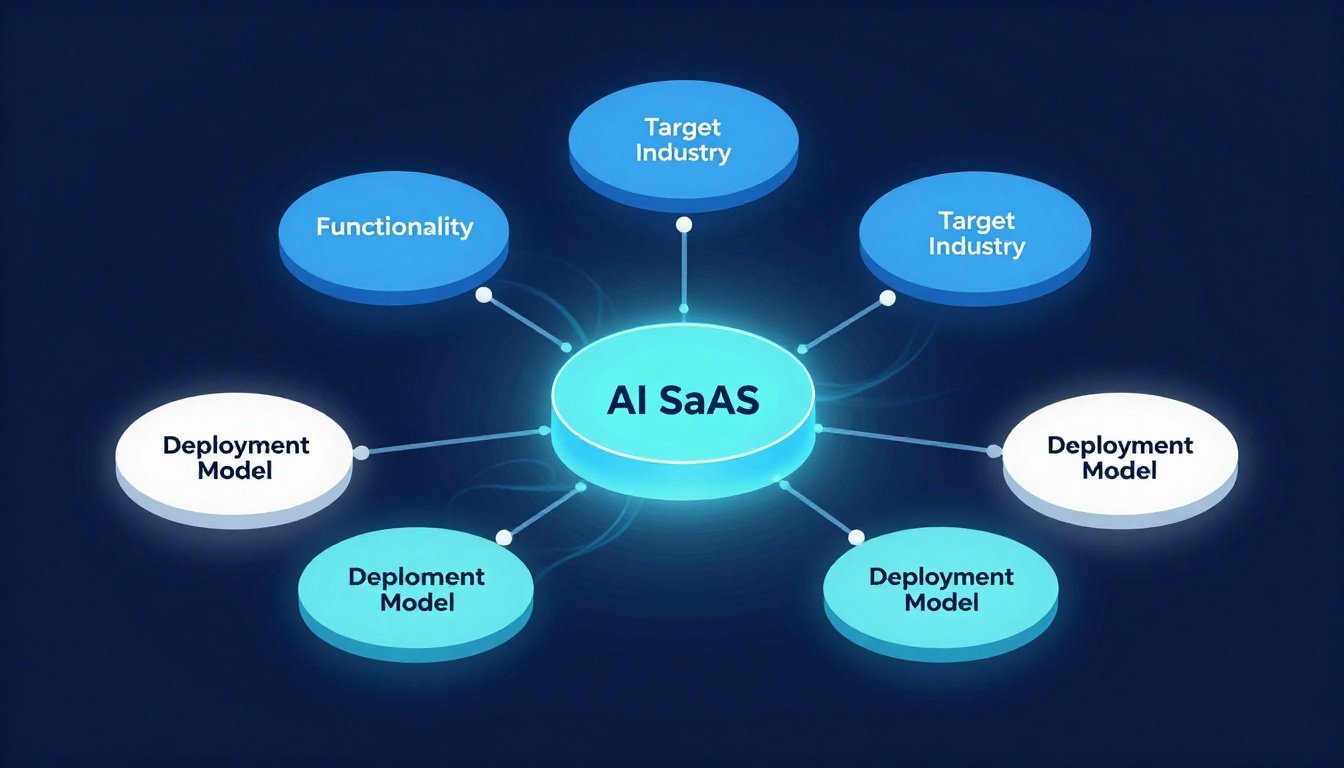
The AI SaaS market explodes with new tools every month. In 2026 alone, investments hit $50 billion, up 25% from last year. This boom creates confusion. You face a flood of options, from chatbots to analytics platforms. How do you pick the right one? Clear classification criteria help sort through the noise. They guide investors to spot winners, buyers to match needs, and developers to find their niche.
Without standards, AI-native tools blend with AI-enabled ones. AI-native means built from the ground up with AI at the core. AI-enabled just adds AI features to old software. This mix muddies decisions. Standardized criteria bring clarity. They let you navigate the space with confidence.
Core Classification Axis 1: Functional Application and Vertical Integration
You start classifying AI SaaS products by what they do and where they fit. This axis looks at real-world use. It separates tools by purpose over tech alone.
Problem Solved vs. Technology Utilized
Some products shine because they fix a key business issue. Take predictive maintenance software that spots machine failures before they happen. Others focus on the tech inside, like a natural language processing API that handles text data. The first type wins on results. The second sells the engine under the hood.
Mixing these can confuse buyers. A tool might use computer vision to solve inventory tracking in retail. Classify it by the pain point for better marketing. Or highlight the tech if you target developers.
Businesses can audit their product this way. List the main problem it tackles. Then note the AI tech that powers it. This framework shows your core value. It helps position against rivals.
Horizontal vs. Vertical Market Focus
Horizontal AI SaaS works across industries. Think CRM tools like HubSpot that automate sales for any business. They offer broad appeal and scale fast.
Vertical ones dive deep into one sector. Radiology AI from PathAI aids doctors with image scans in healthcare. These tools solve niche problems with high precision.
Leaders like Salesforce rule horizontal spaces. In verticals, Tempus leads oncology data analysis. Pick based on your goals. Horizontal reaches more users. Vertical charges premium prices.
This choice shapes your strategy. Horizontal tools need general features. Vertical ones demand industry know-how.
Depth of Integration (System Replacement vs. Augmentation)
Deep integration means the AI SaaS replaces old systems. It takes over workflows, like full ERP platforms with AI forecasting. This brings big changes but huge gains.
Augmentation adds smarts to what you have. Tools like Grammarly boost writing without swapping your editor. They slip in easy and cut friction.
Assess your team’s readiness. Replacement suits bold overhauls. Augmentation fits quick wins. Balance impact with ease of use.
Many firms start with augmentation. It builds trust before full swaps.
Core Classification Axis 2: Technology Stack and AI Maturity Level
Next, peek under the hood at the tech. This axis gauges how advanced the AI is. It affects reliability and future-proofing.
Machine Learning Paradigm Dominance
Most AI SaaS leans on one main learning type. Supervised models predict outcomes, like sales forecasts from past data.
Unsupervised ones group data without labels. They segment customers for marketing.
Reinforcement learning optimizes choices, such as ad bidding in real time.
Generative AI creates content, like Jasper for blog posts.
A 2026 McKinsey report shows generative AI SaaS adoption up 45% year-over-year. It outpaces predictive models at 20%. This shift favors creative tools.
Pick the paradigm that matches your needs. Generative suits content teams. Supervised fits finance pros.
Data Dependency and Model Retraining Frequency
Some models run on fixed data. They stay accurate for months with no tweaks.
Others learn on the fly. They need fresh data weekly to adapt, like fraud detection in banking.
High dependency raises costs. Retraining demands resources and time.
Low ones offer stability. But they might miss new trends.
Check your data flow. If it’s steady, go static. For volatile fields, choose adaptive.
This choice ties to pricing. Frequent retrains often mean higher fees.
Customization vs. Off-the-Shelf Solutions
Off-the-shelf AI SaaS comes ready to use. You tweak basics, like settings in ChatGPT Enterprise.
Custom ones let you build from scratch. Platforms like Google Cloud AI require setup for your data.
Off-the-shelf speeds rollout. It’s great for small teams.
Custom fits unique cases. But it costs more in time and money.
Weigh your skills. Start simple, then customize as you grow.
Core Classification Axis 3: Deployment Model and Data Governance
Where and how you run the AI matters. This axis covers setup and safety rules.
Cloud Native, Hybrid, or On-Premise AI Execution
Cloud-native tools live fully online, like AWS SageMaker. They scale easy but rely on internet speed.
Hybrid mixes cloud and local servers. It balances control and power.
On-premise keeps everything in-house. Firms in defense pick this for security.
Latency hurts cloud in real-time apps. Data laws favor on-premise in Europe.
Choose by your setup. Cloud suits most startups.
Data Handling and Privacy Compliance (GDPR, HIPAA)
Tools must guard data well. Some store it locally to meet GDPR rules.
Others anonymize inputs for HIPAA in health.
Built-in features like encryption set top products apart.
The EU’s AI Act from 2025 stresses these standards. It calls for clear risk checks in deployment.
Sensitive sectors demand strict compliance. General tools can be looser.
Audit for your industry. Non-compliance risks fines.
API-First vs. GUI-Centric Delivery
API-first designs serve coders. You integrate via code, like OpenAI’s endpoints.
GUI-centric offers dashboards. Non-tech users click through, as in Tableau’s AI visuals.
APIs build flexible stacks. GUIs speed daily tasks.
Most products mix both. But lead with one based on users.
Developers love APIs. Managers prefer GUIs.
For AI in business, APIs enable custom flows.
Core Classification Axis 4: Business Model and Commercial Structure
Money and sales shape the product too. This axis looks at how you pay and position.
Usage-Based Pricing vs. Seat Licensing
Usage ties cost to action. Pay per API call or data byte, common in AI due to compute needs.
Seat licensing charges per user monthly, like Zoom.
AI’s variable load favors usage. It aligns with value.
But seats simplify budgeting.
Match to your scale. Startups like usage for low entry.
Build, Buy, or Partner Ecosystem Positioning
Build means you create core models, like Anthropic with Claude.
Buy uses others’ tech, layering on features.
Partner integrates multiple, like Zapier with AI hooks.
Builders lead innovation. Buyers speed to market.
Partners fill gaps.
Your role sets rivals. Builders compete on tech. Partners on ease.
ROI Metrics and Value Capture Mechanism
ROI comes in flavors. Cost cuts from automation, like chatbots saving support hours.
Revenue boosts via better leads from AI scoring.
Risk drops with fraud alerts.
Target buyers by metric. Ops folks chase savings. Sales teams want growth.
Quantify your wins. Use case studies to prove it.
Conclusion: Navigating the Evolving AI SaaS Taxonomy
AI SaaS classification spans functions, tech, deployment, and business angles. No one axis tells all. Together, they paint a full picture.
Use them for smart choices. Investors spot undervalued gems. Buyers avoid mismatches. Developers carve niches.
To assess any tool, run this checklist:
- What problem does it solve? Horizontal or vertical?
- What’s the main AI type? How often retrain?
- Cloud or local? Compliance ready?
- Pricing model? ROI focus?
Apply these criteria next time. You’ll navigate the AI SaaS world better. Start classifying today for sharper decisions.